A performance photograph can make an event feel close enough to remember, even when the viewer was never there. Light catches hair; a microphone cuts across a face; a dark background seems to promise something beyond the frame. The invitation is powerful. It is also where a caption can begin inventing a night. Was the room hushed, the crowd impatient, the singer exhausted, the song intimate? A still photograph cannot settle those questions simply because its atmosphere feels persuasive. Looking carefully means allowing the frame to be evocative without asking it to testify to a sound it does not contain.
What this frame actually gives us
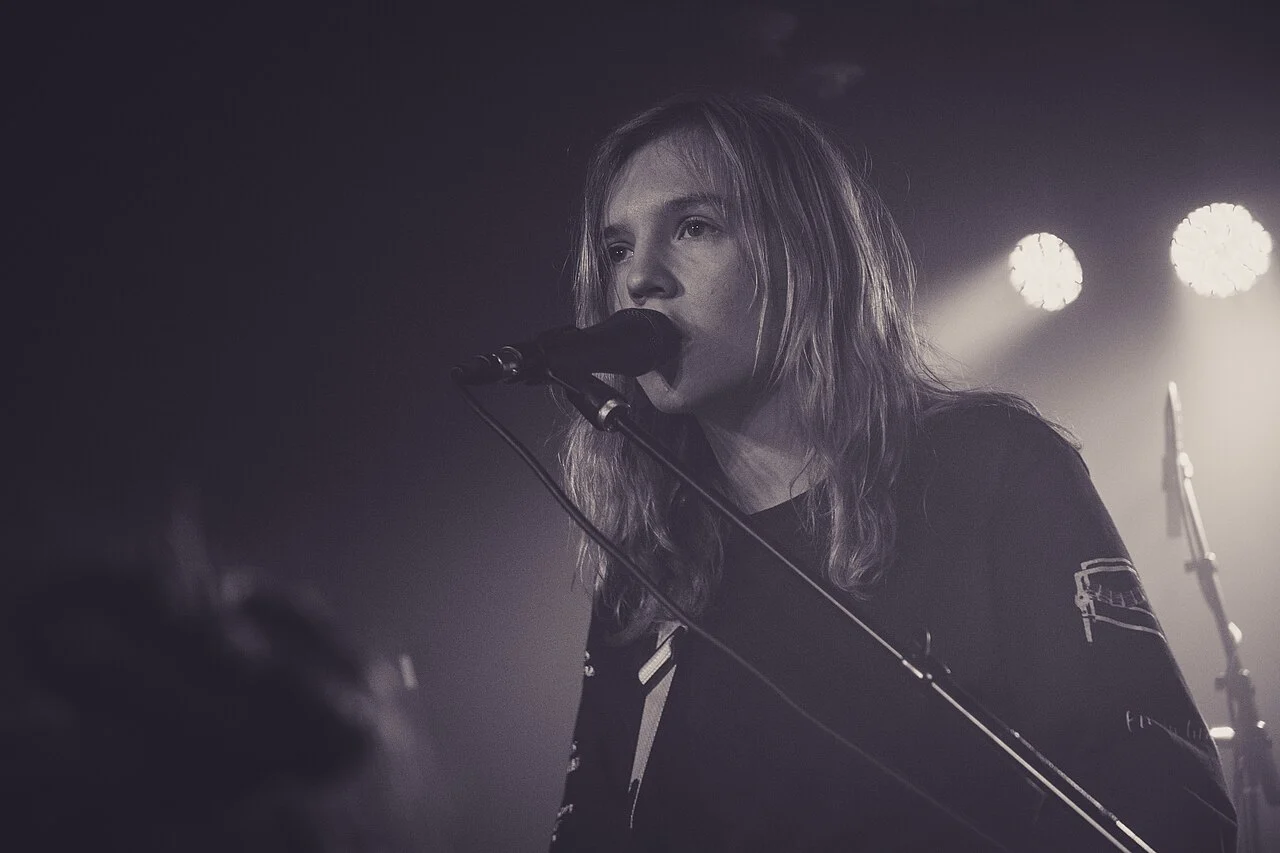
The photograph accompanying this feature shows a performer at a microphone, a diagonal stand and bright stage lights behind. The Commons record names photographer Cody Schneider and locates the image at Globe Hall in Denver. Those source details add context; they do not let us hear the performance or identify a song. We have not attended the event, interviewed the subject or compared a recording.
Even a small change in wording matters. A face lit from behind is a visible observation. A vulnerable moment is an interpretation. The first can support the second as a proposed reading, but does not make it a fact about the performer’s feelings. That distinction leaves space for an expressive response while avoiding a biography constructed from a facial expression.
Atmosphere belongs to the viewing experience too
When a photograph feels quiet, the quiet may partly be ours: the screen has no soundtrack. A monochrome image can encourage attention to light and shape, yet that viewing experience does not establish how the room sounded. A writer can describe the image as visually restrained without declaring that the audience was silent. These sentences do different work, even when they seem equally natural in a magazine caption.
Consider two original, hypothetical captions for an imagined picture. One says that a singer pauses before the final chorus; the other says that the image catches a singer with eyes lowered beside a microphone. Unless a reliable source identifies the musical moment, only the second stays within what that imagined frame could show. Adding poetic language later cannot repair an unsupported event claim at the beginning.
The Library of Congress’s teacher guide for photographs separates observing details, reflecting through hypotheses and asking further questions. It is a helpful permission to move between those activities without collapsing them. Our emotional response can become a question worth investigating rather than a verdict quietly attached to someone else’s life.
A caption can have three different voices
Try writing three short passages under a performance image you have permission to use. In the first, describe visible details without an emotion word. In the second, attribute only the contextual facts actually supplied by a reliable record: photographer, location or documented event. In the third, frame an interpretation in your own voice. You might write that a narrow band of light makes the surrounding dark feel unusually expansive.
Keep those passages separate while drafting. When you combine them into a finished caption, look for a moment when a suggestion has turned into a claim. Seems suspended is an interpretation; waited for applause is an event. The second may be supportable with a recording or contemporary account, but the photograph alone does not provide that evidence. There is no need to force the caption to answer everything.
An unanswered question can deepen the reading. What lies outside the crop? Was the image made during a set, a rehearsal or another moment? Does the source identify the event date, or merely give a date associated with the file? Ask the source what its fields mean before treating a convenient timestamp as a complete chronology. A precise unknown is more respectful than an invented scene.
Choosing an image is an editorial decision
For a personal music newsletter or a small publication, choose a photograph for the role it can honestly play. An image used to illustrate a discussion of stage lighting need not be presented as documentation of a different artist’s show. An image used to report a named event requires a reliable match to that event. Attractive framing cannot substitute for the missing connection.
Before paying for a print, download or image license, ask what the product actually includes and which uses are permitted. A decorative print purchase and permission to reproduce a photograph in a publication are different needs. Preserve the creator’s supplied credit and the actual source information, and check the specific terms rather than relying on the fact that an image is easy to save from a website. We recommend no particular vendor or license package here.
Let the silent frame remain an invitation
There is a temptation to finish every cultural image with a complete story. The more compelling the photograph, the more confidently the story seems to arrive. But an honest feature can leave the song unheard. It can explain why the arrangement of a microphone, face and light holds attention, then admit that an entire performance remains beyond it. That is a richer encounter than a false memory of a night no writer witnessed.
For your own caption note, keep a final line called further evidence. A program, a documented recording, a photographer’s account or another reliably identified frame might help answer a particular question. None should be invented merely to make the prose flow. The goal is not to drain feeling out of a photograph. It is to give feeling a clear place beside the facts, where another viewer can respond without being misled about what has been established.
Sources & further reading
Published sources for the details and examples discussed in this story.