A striking silhouette can look effortless precisely because its work is difficult to see. A dress stands away from the torso; a cape opens a quiet space around the neck; a skirt seems to hold a pocket of air. Calling all three sculptural describes an impression, but leaves the interesting question unanswered: what makes each volume possible? The V&A’s online construction studies offer a way into that question without pretending that looking at a screen is the same as handling a couture garment. They also suggest a useful creative exercise: describe a shape before trying to reproduce it.
Three different explanations for volume
The museum discusses three Balenciaga designs through digital animations developed with London College of Fashion students. Its tulip dress uses stiff silk gazar and joins fabric at the center front and back rather than at side seams. A separate shoulder-hung panel contributes to its apparently loose shape. In the later cape-and-dress ensemble, the dress body comes from one piece joined at the back, while carefully pieced fabric shapes the cape neckline. The historical evening dress offers another explanation: hoops, draping and a shaped hem contribute to its expanded skirt.
These are the museum’s construction observations, not instructions inferred from the photographs. The contrast matters more than a single flattering adjective. A similar-looking outward volume can depend on different relationships among material, joining and support. Treating every roomy garment as a version of the same simple shape would miss that difference.
Look at the empty shape as well as the fabric
For an original viewing exercise, draw two outlines on ordinary scrap paper. One follows the visible outside edge of a garment in an image; the other loosely marks the body’s apparent position. Leave uncertain areas blank rather than completing them from habit. The space between those lines becomes the subject of the sketch. It may widen at a shoulder, narrow near an elbow or open behind the wearer. No measuring claim is needed.
Now write a verb next to each area: projects, hangs, folds, gathers or curves. A verb is more useful than an automatic judgment such as flattering because it describes a visual relationship that another reader can discuss. If the photograph does not reveal how the fabric is held, write support unseen. That small admission keeps observation from turning into an invented technical explanation.
A paper experiment that stays a paper experiment
Take two separate rectangles of scrap paper and imagine that each represents a different proposed design. Curve the first loosely into a tube without fixing it. Fold a narrow edge of the second inward before curving it. Compare the shadows and the space each shape encloses. This is an original composition exercise, not a reconstruction of any museum object, and ordinary paper cannot predict the behavior of silk.
The useful result is a question: which change altered the outline, and which merely altered the surface? Make a small side-view drawing beside each paper form. If you later discuss a fabric project with an experienced maker, these drawings can explain the visual intention without claiming that a fold, seam or stiffener has already been engineered. There is no reason to buy an expensive length of fabric to answer a question that is still only about the outline.
Front and back tell different stories
A front view can make a design seem calmer than a back view. Rather than choosing the more dramatic image as the complete explanation, give the two views separate jobs. Let the front establish the overall proportion and let the back complicate it. A side view, if the institution supplies one, may change the relationship again. Absence of that view is a limit of the available record.
Try a three-sentence description: the first records what is visible at the front; the second records what changes at the back; the third asks what remains hidden. This produces a more interesting fashion note than guessing how the garment would feel on a body. It also resists the habit of turning a museum image into an instant shopping recommendation for a superficially similar contemporary dress.
Spend on the question you actually want to answer
For someone drawn to construction, a well-documented exhibition book may answer more than another inspirational image collection. Before buying, inspect the publisher’s contents and sample pages for the kind of material you want: object records, construction drawings, close details or curatorial essays. None is automatically a substitute for the others. A beautiful book can be the right purchase for visual pleasure while offering little practical construction information.
For a maker considering fabric, keep the request narrower. Describe the intended volume and ask the supplier or qualified maker what information is needed to assess it. The name of a fiber alone does not tell you how a particular cloth will behave in a proposed design. Buying a small sample can support a discussion, but it does not establish the success of a finished garment. Avoid treating a museum’s explanation of one historic material as a guarantee for a different product sold today.
What the online encounter can honestly leave open
A useful fashion feature need not end with ownership or imitation. It can end with a better vocabulary for looking: where a line begins, how a volume changes when seen from another direction, and which technical statement belongs to the institution rather than to the viewer. That vocabulary is portable even when the object itself is inaccessible.
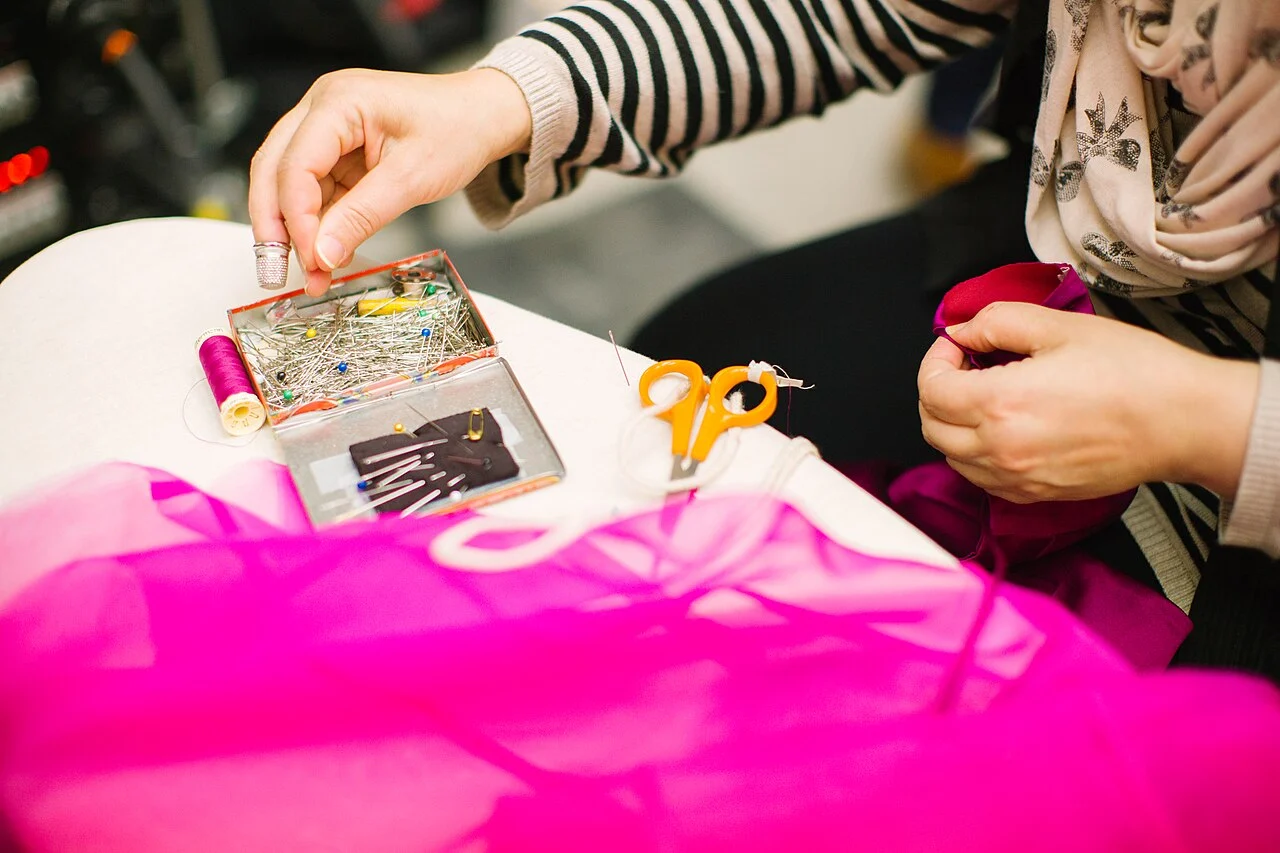
Our paper study and reading method are suggestions, not reported studio tests. We have not handled these garments, examined their interiors or attended a fitting. The accompanying sewing photograph illustrates material work in general; it is not a picture of these objects being made. Keeping those distinctions visible gives the museum record room to be precise and leaves the reader free to imagine a genuinely different design.
Sources & further reading
Published sources for the details and examples discussed in this story.