A title can name what is pictured, suggest something just outside it or appear to contradict it. The third possibility is not automatically more intelligent than the first. It needs a reason to belong to the proposed issue. To compare those relationships, we drew one imaginary chair scene and paired it with three original titles. These are invented culture-cover studies, not announcements of a real gathering, reviews of an exhibition or quotations from an interview.
Let one picture do three different kinds of work
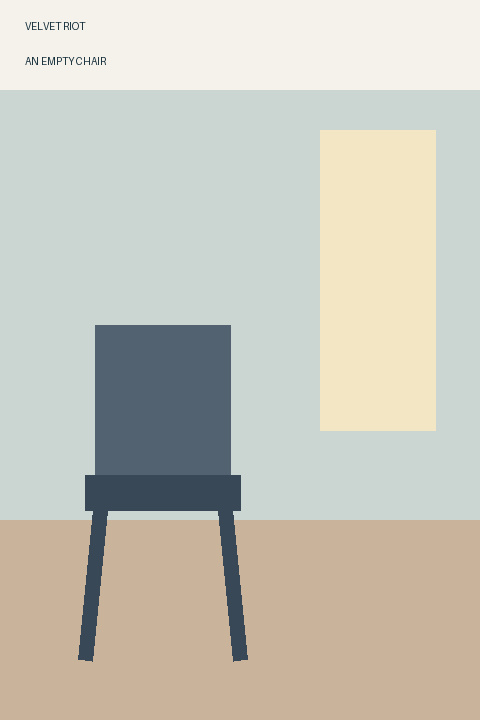
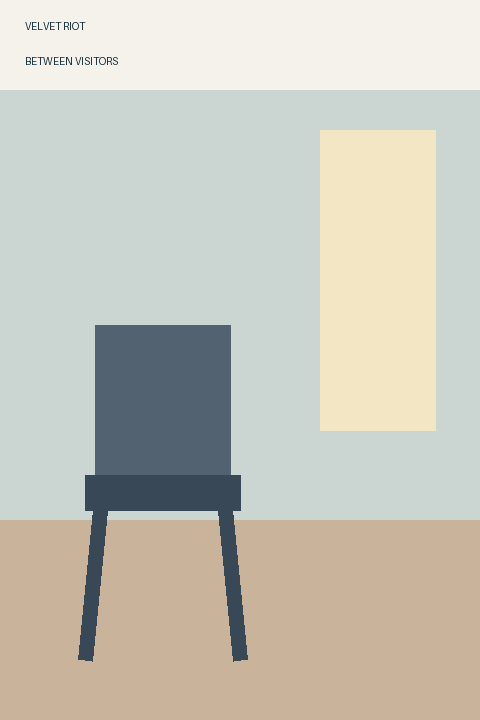
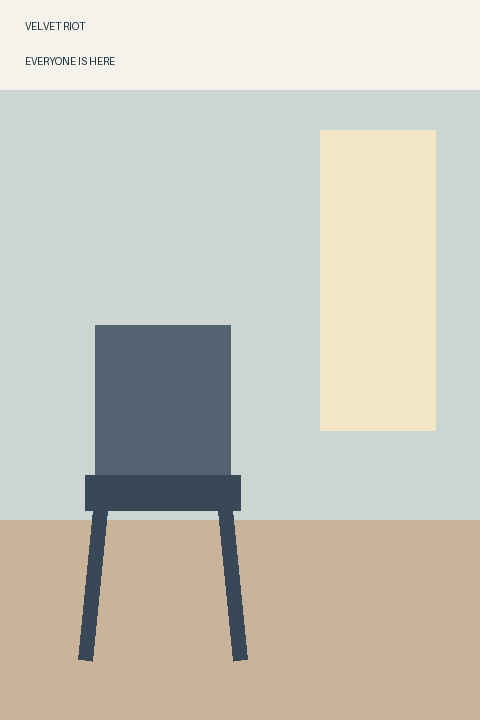
The image remains unchanged beneath the title band: one blue-gray chair stands on a tan floor against a pale wall. A lighter upright rectangle appears at the right. It might suggest a window, but the drawing does not supply a view through it. No person occupies the chair. There are no clothes, bags, name cards or other clues identifying who has left or might arrive.
The masthead stays in the same upper-left position. Each title uses the same small text treatment beneath it. That deliberately plain treatment limits the comparison: a dramatic change of type scale or placement could produce another emphasis entirely. Here the words change while the image, space and hierarchy stay fixed, so we can discuss the relation rather than attribute everything to a new layout.
Literal: An Empty Chair
The first title names the most obvious feature. It lets a reader recognize the same thing twice, once in words and once in shapes. That redundancy can be useful for an issue concerned with the chair itself: its image, its role in a performance or the different ways an ordinary seat is represented. Literal wording does not have to be a failure of imagination.
It can also narrow the invitation too soon. I find myself looking at the object before asking about a room or an absent person. If the imaginary issue were actually about who gets invited into cultural spaces, this title might make the chair seem like the whole subject. The image has not changed; the possible editorial question has become smaller in my reading.
Oblique: Between Visitors
The second title adds a time relationship that the picture alone does not establish. It suggests that somebody has been there and somebody else may follow. The chair becomes a possible interval rather than only an object. The pale rectangle and unoccupied floor can now participate in a story about waiting, exchange or a room briefly without company.
Those visitors are not facts discovered in the drawing. They are the premise introduced by this invented title. An actual issue would need writing or other material that made the relationship worthwhile. Without that support, the phrase could merely lend atmosphere to an unrelated picture. I prefer its openness here, but not as a substitute for an editorial idea that continues beyond the cover.
Counterpoint: Everyone Is Here
The third title sits against a picture with no visible people. The statement and the scene do not agree literally. A reader might treat the empty chair as a place held for somebody, imagine a gathering outside the frame or ask whether presence is being discussed in another sense. Those are possible interpretations, not meanings verified by a survey.
I would hesitate to use this version merely because its disagreement attracts attention. “Everyone” is a large claim, especially if attached to a real event or community. An actual editor should not imply participation or inclusion that has not been established. In this wholly fictional exercise, the contradiction is available as a design relation; that freedom does not authorize a real attendance claim or manufactured endorsement.
Choose the question the issue can sustain
A Library of Congress research guide discusses how words and images work together in advertising and propaganda, noting their juxtaposition as something worth investigating. That gives the exercise a broader context without making the guide an endorsement of these covers. We have not reproduced one of its historical posters or borrowed its image rights.
For the imagined issue, I would develop Between Visitors. It opens a question about the interval between encounters while leaving the chair recognizable. Before commissioning a finished cover, the editor would need to decide which real essays, conversations or images could sustain that question and agree on the use of any actual material. The literal and counterpoint versions remain useful alternatives, each with a different promise the contents would need to keep.
Sources & further reading
Published sources for the details and examples discussed in this story.