A cover can offer one image and a title while the contents page offers a different kind of entrance. For an original imaginary publication called After Hours, the cover idea is a single window shape. Its contents need not repeat that picture at a smaller size. The two arrangements below instead introduce six named sections, preserving every destination while changing how their relationships appear. They are complete editorial studies, not pages from an existing magazine or a printer-ready edition.
Give both arrangements the same six destinations
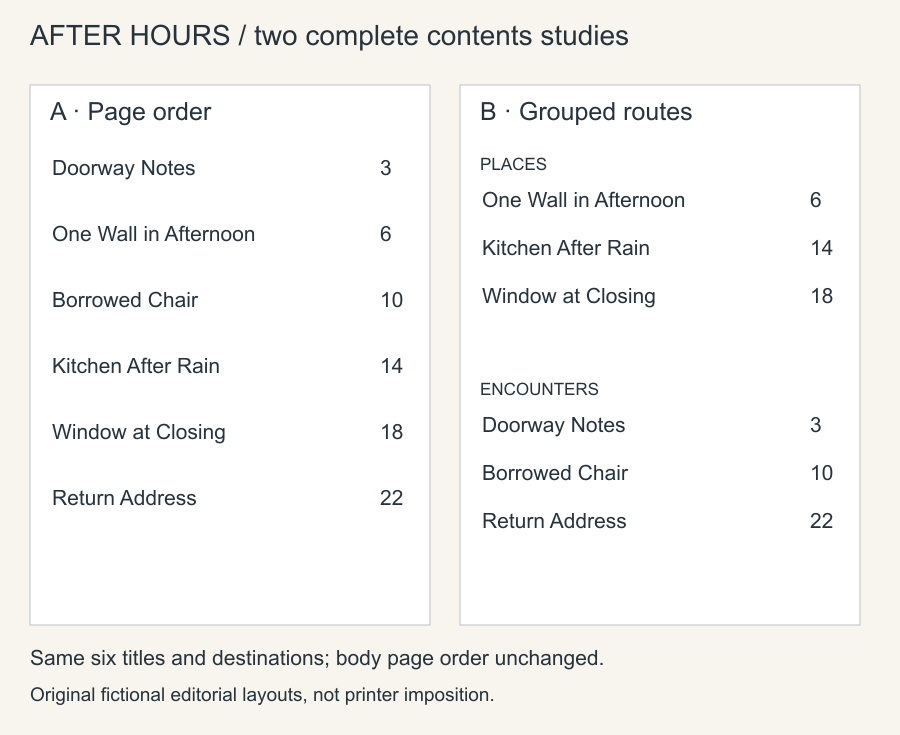
The fictional publication has these section starts: Doorway Notes,page 3;One Wall in Afternoon,page 6;Borrowed Chair,page 10;Kitchen After Rain,page 14;Window at Closing,page 18;Return Address,page 22. These titles and destinations are invented for this comparison. They describe a proposed reading sequence, not reporting already commissioned or a book available to buy.
The first arrangement lists all six in that page order. Each title has its page number beside it, and the numbers occupy a consistent right-hand column. The contents can be read as a compact sequence from entering to leaving. A reader who wants to continue through the publication can locate the next section without learning another grouping system.
Notice what this page contributes that the cover does not: six specific promises and six usable destinations. Repeating the window drawing beside every title would add a recurring mark, but it would not supply more navigation. In this study I leave the image to the cover and let the contents establish a second vocabulary of rooms, objects and addresses.
Make the second entrance a route through subjects
The second arrangement groups the same six entries under two original headings. Places contains One Wall in Afternoon,page 6;Kitchen After Rain,page 14;Window at Closing,page 18. Encounters contains Doorway Notes,page 3;Borrowed Chair,page 10;Return Address,page 22. Every title and reference remains present exactly once.
This page does not move the actual sections. Its first listed destination is page 6 even though page 3 still comes earlier in the publication. That difference is the editorial proposition: someone may enter through the place descriptions before returning to the encounters. The grouped contents makes those relationships available without pretending that the body has been reprinted in a new order.
The headings are also interpretations. Borrowed Chair could plausibly be classified as a place or an object; I put it under Encounters to emphasize the implied exchange. That choice gives an editor something concrete to discuss. If the actual writing later contradicts that grouping, revise the heading or placement rather than making the contents promise a connection the section does not provide.
Check navigation and interpretation separately
Compare the two pages in the original figure. First verify six entries and the same six page numbers. Then trace one destination, such as Kitchen After Rain:page 14 in both arrangements. This is a direct consistency check on the authored study, not a reader trial claiming one design is faster.
Next compare what the first line invites. Page-order contents begins with Doorway Notes. Grouped contents begins with Places and One Wall in Afternoon. I prefer the first when the entry sequence is central to the work; I prefer the second when readers are encouraged to browse related settings. Those are reasons for an editorial choice, not universal rules about attention.
Before producing a real edition, confirm the final section starts after pagination and keep the contents references synchronized. The drawings show reading-page arrangements only. They do not determine binding, sheet imposition, trim margins or a particular printer's specifications. The useful finished decision is a contents page that helps someone find a section and says why that section belongs in this publication.