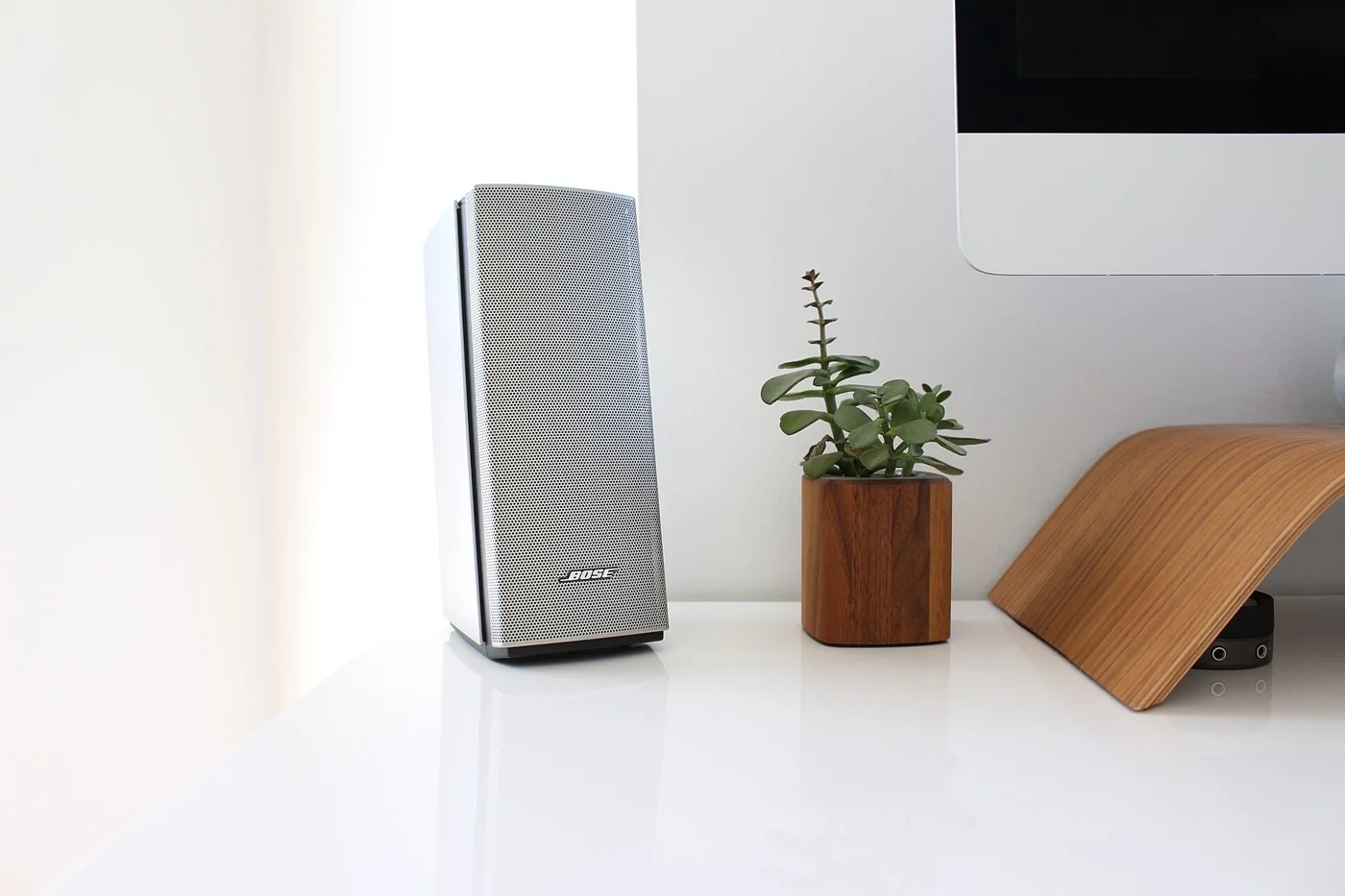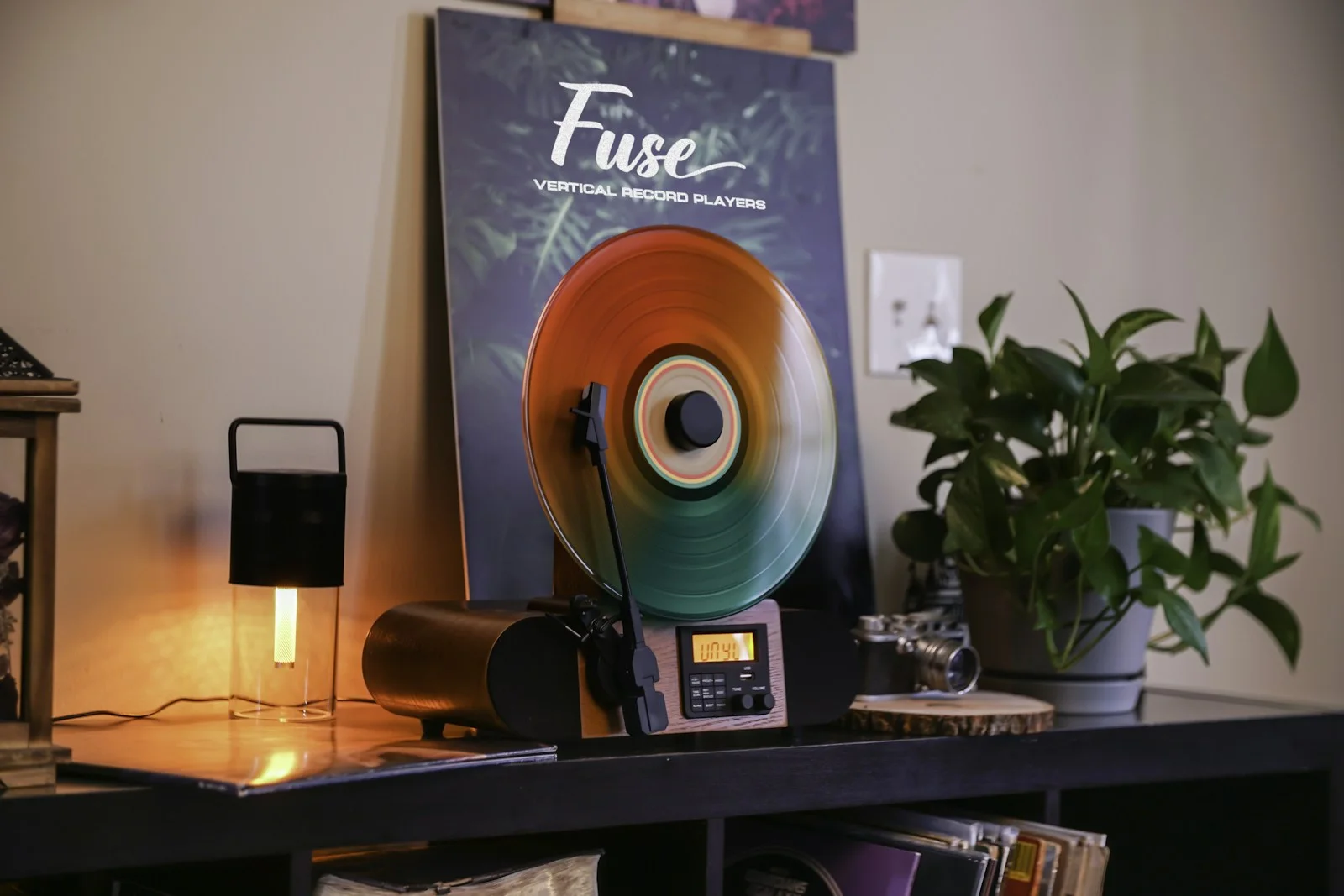
A first record player can turn one end of a living room into a place to slow down. The problem is that a handsome console photograph rarely shows the cable route, the open dust cover or the speakers that still need power. Plan the corner around how you will use it on an ordinary evening, then buy the missing pieces. This is a setup guide based on manufacturer documentation and practical layout considerations, rather than a hands-on equipment review.
Map the whole signal chain before buying anything
Write down the turntable, any phono stage, amplification and speakers in order. A record player does not automatically connect to every speaker. Audio-Technica’s AT-LP3XBT manual, for example, distinguishes PHONO output for a phono input from LINE output for an auxiliary or line input; it specifies active speakers for a direct speaker connection. That example explains the question to ask, not a setting to copy to every model.
Check the manuals for the exact equipment you intend to combine. If you already own a receiver or powered speakers, begin there. Photograph the available connections before shopping and ask a retailer to confirm compatibility rather than buying a collection of adapters speculatively.
Choose a surface for stability, not just the photograph
A narrow sideboard may look ideal until the dust cover hits the wall. Measure the deck with its cover open, allow for rear plugs and inspect the shelf’s load rating. Keep the controls reachable from the front so that changing a record does not involve leaning over a lamp or moving a plant.
U-Turn recommends separating the speakers and turntable onto different surfaces to reduce vibration transfer. Separate stands therefore deserve consideration before decorative upgrades. In a very tight room, ask the equipment manufacturer about suitable isolation options and keep expectations realistic; accessories are not a guarantee that any arrangement will work.
Reserve a real listening position
Choose the seat you will actually use, then work outward. A speaker arrangement that sounds satisfactory from that seat is more valuable than a symmetrical display that only faces a hallway. Keep household traffic and cable routes in mind, especially where someone may walk past with a drink.
Try the layout with boxes or painter’s tape before ordering furniture. Sit down, reach for the controls and imagine returning a record to its sleeve. This small rehearsal often reveals that the beautiful cabinet is too deep, or that one speaker stand will block a door.
Spend first on the pieces you cannot comfortably work around
For a starter system, prioritize a compatible signal chain, a stable deck location and secure cable management. Compare the total package cost, including stands and any required phono stage. A cheaper turntable can cease to be the economical choice if the rest of the setup needs substantial extra equipment.
A decorative record rack, display lighting or upgraded slipmat can wait. If a seller promises a sonic improvement, look for a clear explanation and a useful return policy. Do not treat appearance, a higher price or an enthusiastic user quote as evidence that an accessory will improve your particular room.
Make the corner easy to keep using
Store the records you play most within comfortable reach without crowding the turntable. Keep the manual and a note of the cartridge details with your equipment records. Follow the manufacturer’s directions for setup and stylus care, and check the supplied care guidance before using cleaning fluids or brushes.
For a shared apartment, agree on listening times and the practical limits of the space before chasing louder playback. The most satisfying corner is the one that fits the household and gets used. Build it in stages, leave some empty shelf space and let the collection grow at its own pace.
Useful places to look
Sources & further reading
Published sources for the details and examples discussed in this story.