An outfit photograph contains a stance as well as clothing. Three original stick-figure sketches make that distinction visible by keeping one imagined coat and trouser idea while changing the drawn leg lines. They are schematic proposals, not photographs of a wearer. No body was measured, no garment was fitted and no fabric movement was tested. The question is what a changed line does to an image—not which stance corrects a person’s appearance.
Hold the upper outline still
All three sketches retain the same circular head, straight center line, coat outline and angled arms. The imagined coat is a plain blue-gray shape, with no construction details supplied beyond a visible center mark. Below it, dark lines stand for trouser legs. Their changes are deliberately simple enough to inspect without pretending we have drawn a realistic moving textile.
The drawings cannot show what an actual coat would do at the hip, knee or hem. A real stance could change folds, overlap and the visible amount of each garment. Here we keep those details unresolved so that the leg-line comparison does not become an accidental claim about tailoring or a particular body.
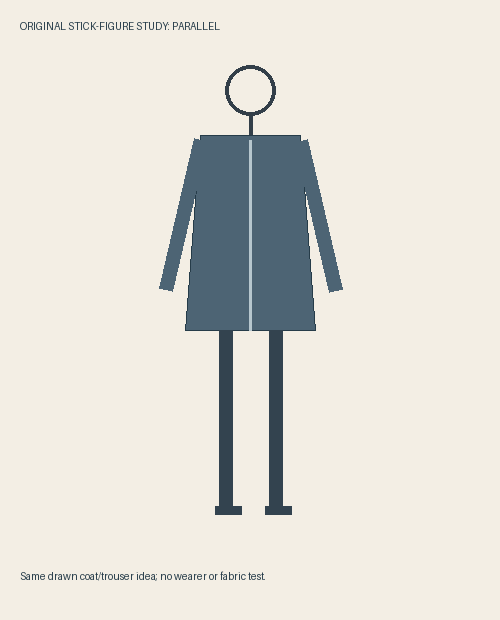
Parallel: continue the vertical direction
In the first drawing, the two leg lines descend in parallel. Their short foot marks sit apart at roughly the same level. The coat’s center mark and the lower vertical lines therefore share an up-and-down direction, even though the coat outline itself widens slightly toward its lower edge.
I would begin with this version if the image brief were to make a vertical relationship easy to read. It keeps the lower half comparatively uneventful. That does not mean a real person should be asked to hold this position, that it is more balanced physically or that it will make actual clothes look longer. The preference belongs to the drawn composition.
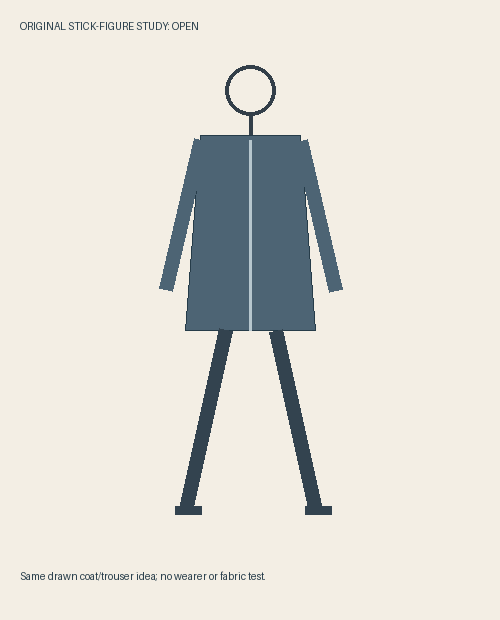
Open: let the lower lines spread outward
The second drawing sends the two leg lines outward from the same starting positions beneath the coat. The foot marks end farther apart, making a broader base in the image. The triangular opening between the lines grows toward the bottom, while the coat itself has not changed.
This version gives the lower part of the drawing more visible spread. I read a contrast between the relatively contained coat and the outward movement below it. The lower endpoints keep the same vertical level in these drawings, although the outward-slanting lines are slightly longer; neither observation measures a real wearer.
For an imagined photograph intended to emphasize that outward geometry, this might be a useful drawing to discuss. An actual subject’s comfort, access needs and consent would govern any real shoot. A schematic line is not an instruction to adopt an unfamiliar position or remain still for a camera.
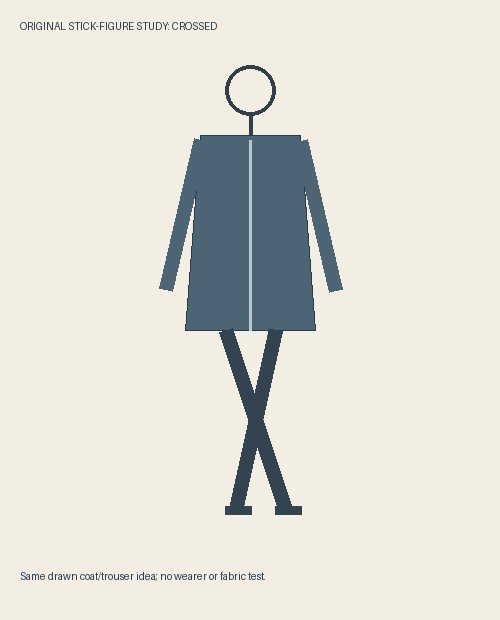
Crossed: introduce an intersection
In the third drawing, the leg lines cross below the coat. The crossing creates a distinct event in the lower part of the image: two downward paths meet, then separate before reaching the foot marks. This is different from both the uninterrupted parallel descent and the outward spread.
I find the intersection more noticeable than the coat’s center mark in this simple sketch. That is an observation about where my attention goes when looking at the drawing, not evidence that a real outfit will photograph that way. Different shoes, garment widths, framing and a real body could change the relationship substantially.
If the coat were the subject of a product image, I would question whether this extra intersection serves the purpose. If the brief were an editorial exploration of crossing lines, it might. The difference is the job assigned to the picture, rather than a rule that one stance is universally more stylish.
Separate an appealing image from a clothing decision
Getty’s formal-analysis vocabulary includes line direction and curvature. It helps name what differs across these sketches without borrowing claims about fit or physique. The drawings change lower lines while retaining the upper outline; they do not establish how a garment is constructed.
When considering a purchase from an actual outfit photograph, look for other legitimate views and the exact product information. A stance can contribute to the pictured outline, so one attractive image is not enough to establish dimensions or movement. Check the garment and its conditions on their own terms instead of buying in order to reproduce a pose.
Sources & further reading
Published sources for the details and examples discussed in this story.